Saturday, July 7, 2018

Royal Geographic Society. Tuesday. 26 June 2018.

Tuesday. 26 June 2018.
Royal Geographic Society
https://www.rgs.org/


Before our visit, I did not realize that I was in any way familiar with the Royal Geographic Society.  As LIS learned about the organization I kept hearing recognizable names of explorers such as: Henry Stanley, David Livingstone, Ernest Shackleton, George Mallory, Edmund Hillary and Tenzing Norgay.  We learned that the RGS was founded in 1830 by a group of wealthy men who liked to travel. The society took a radical step promoting Geography as separate and distinct from other scientific disciplines.  The purpose of the RGS was to go out into the field and gather data and geographical information. This information would be used to create maps and drawings and thus disseminate the information to its members and the world. The RGS was known for sponsoring major expeditions such as: the Northwest Passage, an African mission to determine the source of the Nile River, crossing Antarctica and scaling Mount Everest.

Eugene Ray, Principal Librarian and the staff of ten (eight full-time and two part-time employees) have their work cut out for them. According to the RGS website, the collection includes cultural objects, scientific instruments and personal items of the world's greatest explorers. Over two million items are held including: 150,000 books, 1 million sheets of maps and charts, 3,000 atlases, 40 globes, 1,000 gazetteers, 500,000 items of photographs, artwork, negatives & lantern slides, 800 journal titles, 4,500 expedition reports and more than 100 amateur and professional films. These items are priceless and create a challenge for archiving, preservation and storage. Consider the range of materials, the irregular sizes and the sheer volume of items for which they are responsible. The library is still active today and continues to select items to add to the collection. Some of the collection is digitized--check out the picture library for some amazing photographs. http://images.rgs.org/

Eugene Ray, Principal Librarian @ the Royal Geographic Society telling us about explorer George Mallory's life and his climbing boot worn during an 1924 Mount Everest expedition and recovered from his body in 1999, perfectly preserved.

Among the treasures on this table are hats from Henry Stanley and David Livingstone. Stanley, journalist and African explorer was sent to find the missing missionary and explorer Livingstone who disappeared while searching for the source of the Nile River. Stanley found Livingstone and uttered the famous phrase, "Dr. Livingstone, I presume?".

Documents, scientific instruments, drawings, maps, photographs (and more!) from RGS sponsored expeditions of 
the Northwest Passage, the search for the source of the Nile in Africa, Antarctica, and Mount Everest.

Lucky librarians able to see the priceless artifacts from the Royal Geographic Society.


Sunday, July 1, 2018

National Library of Scotland. 23 June 2018.


Saturday. 23 June 2018
National Library of Scotland
https://www.nls.uk/


On this day during the Edinburgh mini-break, I arranged for my own tour of the National Library of Scotland. Interesting fact...when you walk in the door you are actually on the 11th floor of the building! The lower floors are used for storage. The General Reading Room is located on the 13th floor and contains items from the year 1850 on. The Special Collections Reading Room can be found on the 15th floor and includes rare books, manuscripts, maps and music dating before 1850. Items from the Special Collection include: a check in the amount of 38 pounds endorsed by Jane Austen for her writing, a journal of David Livingston's travels in Africa, an original manuscript of Charles Darwin's Origin of the Species, and a letter written by Mary Queen of Scots six hours before she died.

The NLS, the largest library in Scotland, is funded by the Scottish government and is open to everyone. Previously, it was difficult to get access to the library--a person had to justify their academic reasons for doing so. Fortunately a change in leadership resulted in breaking down the barriers and a philosophy of access to everyone was adopted.

The NLS began in 1689 as a library for lawyers. As a result of the Copyright Act of 1710 put forth by Parliament, a legal deposit was established which made it a legal requirement for books and periodicals to be sent to the library. The size of the collection became too large for a private library to handle, so in 1925 the collection was bequeathed to the National Library of Scotland. The original building was demolished in 1937, and a new art-deco building erected in its place. The building was interrupted by WWII and finally completed in 1956. In 2009 the Visitor Centre was created, including an information desk, cafe, shop, and exhibition space.

The NLS collection currently holds 27 million items and items are added at the rate of around 6,000 items per week. Items are never discarded and include everything from academic journals, tabloids, children's books and comics, to pornography.

In contrast to the British Library which utilizes an automated delivery system, at the NLS books are fetched the old fashioned way, by hand, and sent up to the Reading Rooms via dumbwaiter. During busy times, book fetchers can walk up to ten miles per day, and are even given a shoe allowance! It can take up to 2 hours for readers to receive a requested item, but readers are encouraged to request items in advance of their visit.

I found their website to be very well developed and encourage people to check out their available digital resources. Link below. Here you will find everything from e-resources, to a digital gallery of items in the collection, to maps, to an extensive catalog of moving images featuring professional and amateur movies featuring Scottish history for the last 100 years.  Our guide told us that by the year 2025 the goal is to have 1/3 of the collection digitized.
https://www.nls.uk/digital-resources

I highly recommend a visit to the National Library of Scotland and will proudly carry my Reader's Card as a memento of my time there.

Our guide Veronica Denholm, pictured on right.

Items on hold for library patrons behind the 13th floor. Reading Room.

Looking down the stairwell 15 floors below.

Level 5 stacks.

Our guide, Elaine Simpson explaining how books are cataloged, stored and accessed.
These shelves house hardcover books and they are arranged by size, saving a great deal of space in the stacks.

Paperback books and pamphlets are held in boxes based on size and the date of acquisition.

Unique shelf mark system used @ NLS. HP refers to Scottish Theater Programs. 3 represents the size of the book. 85 is the year the items were acquired (1985) and the last number is the order in which the item was acquired.


British Library Treasures Exhibition. 19 June 2018

Tuesday. 19 June 2018
Sir John Ritblat Treasures of the British Library Gallery
https://www.bl.uk/events/treasures-of-the-british-library

I so wish photographs were allowed in the Treasures Gallery. Trust me that this is a MUST SEE if you find yourself in London. Below is a photograph taken from the British Library website. Link above.

Inside the Treasures Gallery at the British Library (credit: Tony Antoniou)

Imagine a gallery filled with priceless artifacts ranging from scientific drawings, music lyrics, religious texts, political correspondence, books and sound recordings dating back 2000 years.

One minute you are looking at Leonardo DaVinci's notebook, and next you see the Magna Carta (one of only 4 surviving copies), also featured are: handwritten lyrics by the Beatles, Shakespeare's first folio, personal correspondence of Charles Darwin, the Gutenberg Bible, Tyndale Bible, music scores by Beethoven and Handel, Admiral Nelson's Battle of Trafalgar Memorandum, Birds of America by John Audubon, the original manuscript version of Alice's Adventures in Wonderland, American Revolutionary War Tax Stamps, and the list goes on and on.

Below is a link to all items in the collection.
https://www.bl.uk/british-library-treasures/collection-items

You will not regret visiting this amazing gallery.

St. Paul's Cathedral Library. 19 June 2018

Tuesday. 19 June 2018.
The Library - St. Paul's Cathedral
https://www.stpauls.co.uk/history-collections/the-collections/the-library

LIS group on the steps of St. Paul's Cathedral. Photo by Alex Brewer.
Today LIS enjoyed a tour of St. Patrick's Cathedral led by Yvonne who has served as a guide for 12 years.  

The first church built on this site dates back to 604 A.D. In 1666, the Great Fire of London caused the church and its contents to be completely destroyed, with the exception of a small number of marble artifacts able to withstand the heat. During bombing raids in WWII the cathedral miraculously escaped major damage. The present building is the fifth iteration of the Cathedral and was designed by Sir Christopher Wren, a polymath, scientist, veterinary surgeon and architect. Construction began in 1675 and was completed thirty five years later in 1710. 

LIS was led up to the triforium level of the Cathedral. 
Definition from Merriam-Webster:

Definition of triforium

plural triforia play \trī-ˈfȯr-ē-ə\
: a gallery forming an upper story to the aisle of a church and typically an arcaded story between the nave arches and clerestory
Yvonne told us that the triforium is home to many historical objects and gifts that aren't necessarily appropriate for display in the cathedral such as these Roman artifacts.

The plastic sheeting was set up to protect books from construction dust and debris.

St. Paul's Cathedral Library designed by Christopher Wren.

The Librarian's name is Joseph Wisdom!  Could his last name be more perfect? No.

Once again, we were very fortunate to be given the opportunity to tour the St. Paul's Cathedral library. Mr. Wisdom was supposed to be away on vacation, but adjusted his schedule to accommodate our group. In addition, as of July 2nd, the library will be closed for renovation for a period of 18 months. Work is being done to conserve the fabric of the room (woodwork, stonework, etc.) and to provide more space for collection display.

Mr. Wisdom told us the collections team is comprised of the Manager, an Archivist and Senior Conservator. He explained that technology exists to restore materials in the collection, but the decision must be made within an ethical framework--is there good reason for doing so? His philosophy is to preserve where it merits preservation. In some cases, items in the collection such as diplomatic gifts never should have been accepted. The items are kept, but additional measures may not be taken for their preservation.

The collection was lost in the Great Fire of 1666 with the exception of 20 books and 3 manuscripts held at Zion College. The collection then grew as a result of begging, borrowing and buying (Mr. Wisdom's words). Additionally, a tax on coal provided funds for the restoration of churches. In 1712 the collection expanded by 2,000 books bequeathed by Henry Compton, the late Bishop of London, which provided the foundation of St. Paul's theological collection.

In the past, duplicates within the St. Paul's collection were weeded, but today Mr. Wisdom is hesitant to do so because "the afterlife of a book is just as interesting"--who owned it, how was it used, etc. It becomes a physical artifact that has had a life in time. During WWII the most valuable books were removed and stored in a cave in Wales.

One of the most important books in the collection is a first edition of William Tyndale's Bible. This was the first holy book printed in English (1526) and one of only three copies still in existence. One can find another example on display at the British Library Treasures Gallery. Tyndale's Bible inspired the King James version known today.

I thoroughly enjoyed the library tour. Mr. Wisdom was funny (in an understated British way) and quite informative. I especially enjoyed hearing about collection management and development and how the process may change over time.

We're on top of the world! We took 528 steps to the top of the Cathedral. Photo by Alex Brewer. 

Saturday, June 30, 2018

National Museum of Computing & Bletchley Park. 18 June 2018

Monday. 18 June 2018

The National Museum of Computing
http://www.tnmoc.org/

&

Bletchley Park
https://bletchleypark.org.uk/


"The National Museum of Computing, located on Bletchley Park, is an independent charity housing the world's largest collection of functional historic computers, including the rebuilt Colossus, the world’s first electronic computer, and the WITCH, the world's oldest working digital computer. The museum enables visitors to follow the development of computing from the ultra-secret pioneering efforts of the 1940s through the large systems and mainframes of the 1950s, 60s and 70s, and the rise of personal computing in the 1980s and beyond."
"About Us" ,National Computer Museum website. Link above.


Sheridan Williams, Mathematician and National Computer Museum employee led the LIS group on an in-depth tour about the history of computing. We began with Bletchley Park's involvement in breaking the encrypted German code from WWII. Sheridan asked if we were familiar with the movie The Imitation Game starring Benedict Cumberbatch as Alan Turing. He jokingly said the movie should be called The Irritation Game due to inaccuracies in the story. The movie focuses on Alan Turing and the group formed to break the German code. Only one woman is prominently featured in the movie, an analyst played by Keira Knightley. If one were to visit Bletchley Park at the time, he/she would have found a total of 10,000 employees. The movie failed to point out that 8,000 of these employees were women. Women outnumbered men by a ratio of 8 to 1. 

A rebuilt Bombe machine originally developed by Alan Turing. 250 Bombes were built to decipher encrypted messages generated by German Enigma machines during WWII. Bombes were designed to do one specific task, so they are considered to be machines rather than computers.

Actual Lorenz machine used by the Germans to encrypt messages.
The Colossus Computer, considered to be the first electronic computer, designed by Tommy Flowers
to analyze German messages generated by the Lorenz cipher.

Colossus Computer

The remainder of the tour showcased the development of the computer with artifacts ranging from an abacus to the Macintosh computer from the 1980's to more contemporary personal computers and applications. Following the industry through the decades, it was easy to see just how far computers have come.  Early computers were massive and expensive. Each subsequent advancement resulted in smaller, faster, less expensive computers with more available memory. Sheridan told us about Moore's Law which states that every two years computers become twice as fast and twice as small as their predecessors.

As a librarian and graduate student, I certainly appreciate and utilize computers in my everyday life. Once the tour was over, Sheridan was asked about the NMC archive and digitization of the collection. Unfortunately, I was not part of the group who were able to see the archive. The tour provided great detail about the history of computing, however I wish that more information about direct applications to the field of library science, or how the NMC collection is cataloged, digitized and managed, could have been shared with the entire LIS group.


Following the NMC tour, LIS explored Bletchley Park on our own. I loved the multi-media and interactive displays allowing us to take a more active role in learning about the history and people of Bletchley Park. I watched a movie describing what was expected of female code breakers and the training they underwent. I put on headphones and scanned to intercept a radio signal over the airways. I learned about the difference between a code and a cipher (see photo below) and perused books, posters and letters from that era. The 40's music playing in the gift shop also helped transport me back to the WWII era. One gentleman visitor in a wheelchair was happily singing along to the music he enjoyed in his younger days. That is a visual that will stay with me. 


Enigma machine. (One is also on display at the British Library.)


Letter written by US President Dwight Eisenhower to Major General Sir Stewart Menzies expressing his thanks and appreciation to the men and women of Bletchley Park.


Friday, June 29, 2018

Week Three Photos/Scotland Mini-break.

Ice cream vending machine in our dorm!


Watching England World Cup Match in lounge.

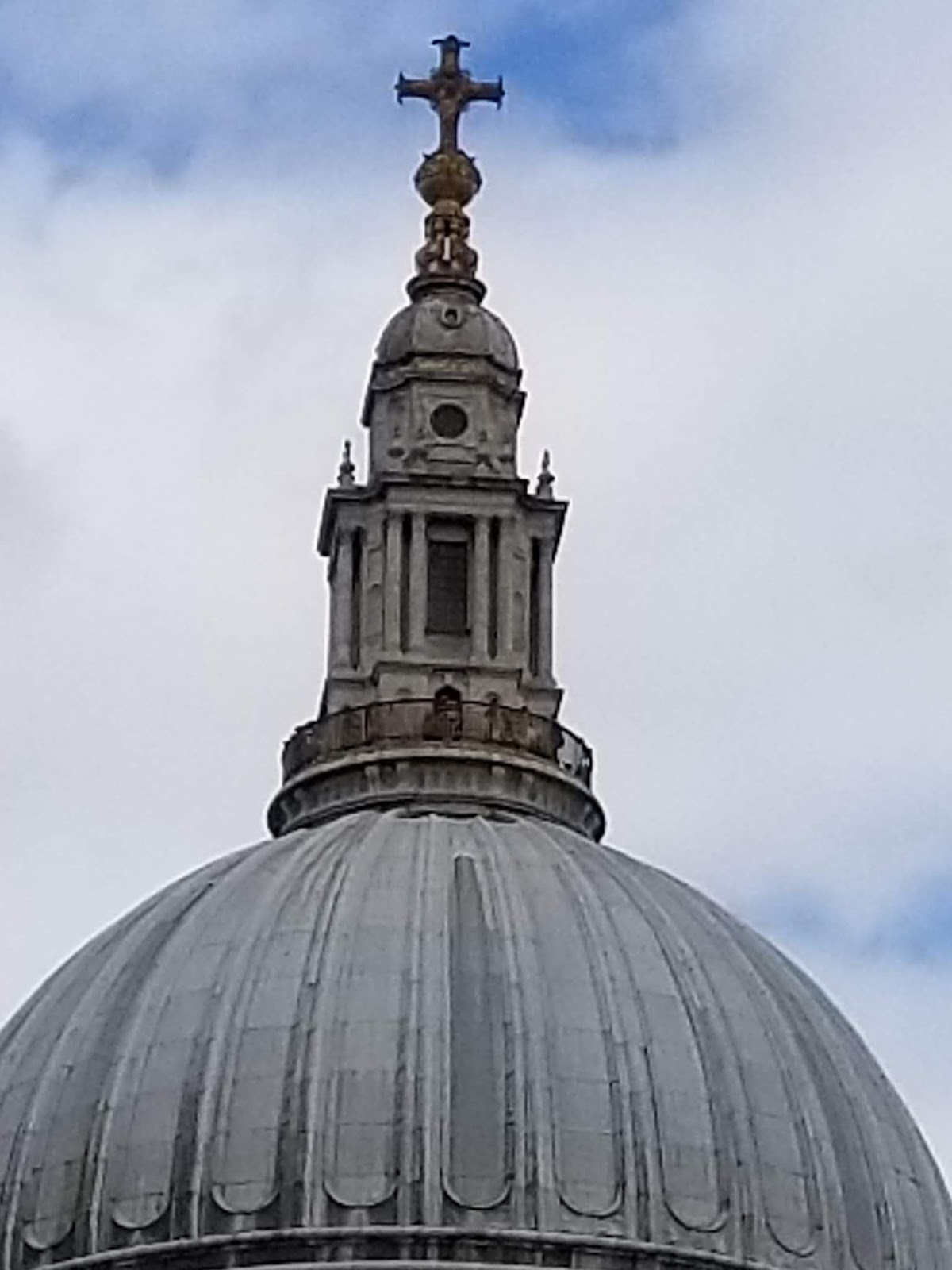
On top of the world @ St. Paul's Cathedral.


LIS group before St. Paul's Cathedral Tour.

Oh yes we climbed 528 steps to the top of the Cathedral.

Of making many books there is no end. Sign above librarian's door.


Floating staircase used for filming Harry Potter.


View of St. Paul's from the triforium.


Westminster Abbey.

The sign reads Librarian and keeper of the munments.


Chapter House @ Westminster Abbey.


Afternoon tea @ Butterscotch.

Beautiful paper flower ceiling decorations.

My elephant tea pot. I chose White Peony tea.


King's Cross station. Waiting for train to Edinburgh.


Our residence in Edinburgh. Pollock Halls @ University of Edinburgh.


Fabulous French bistro Jeannie and I discovered! 

Traditionnelle salade de chèvre chaud

eau et vin
le menu


National Library of Scotland.

The Elephant House cafe where JK Rowling wrote Harry Potter.


Writers Museum.


Rubbing the nose of the Greyfriar's Bobby for good luck.


National Museum of Scotland.


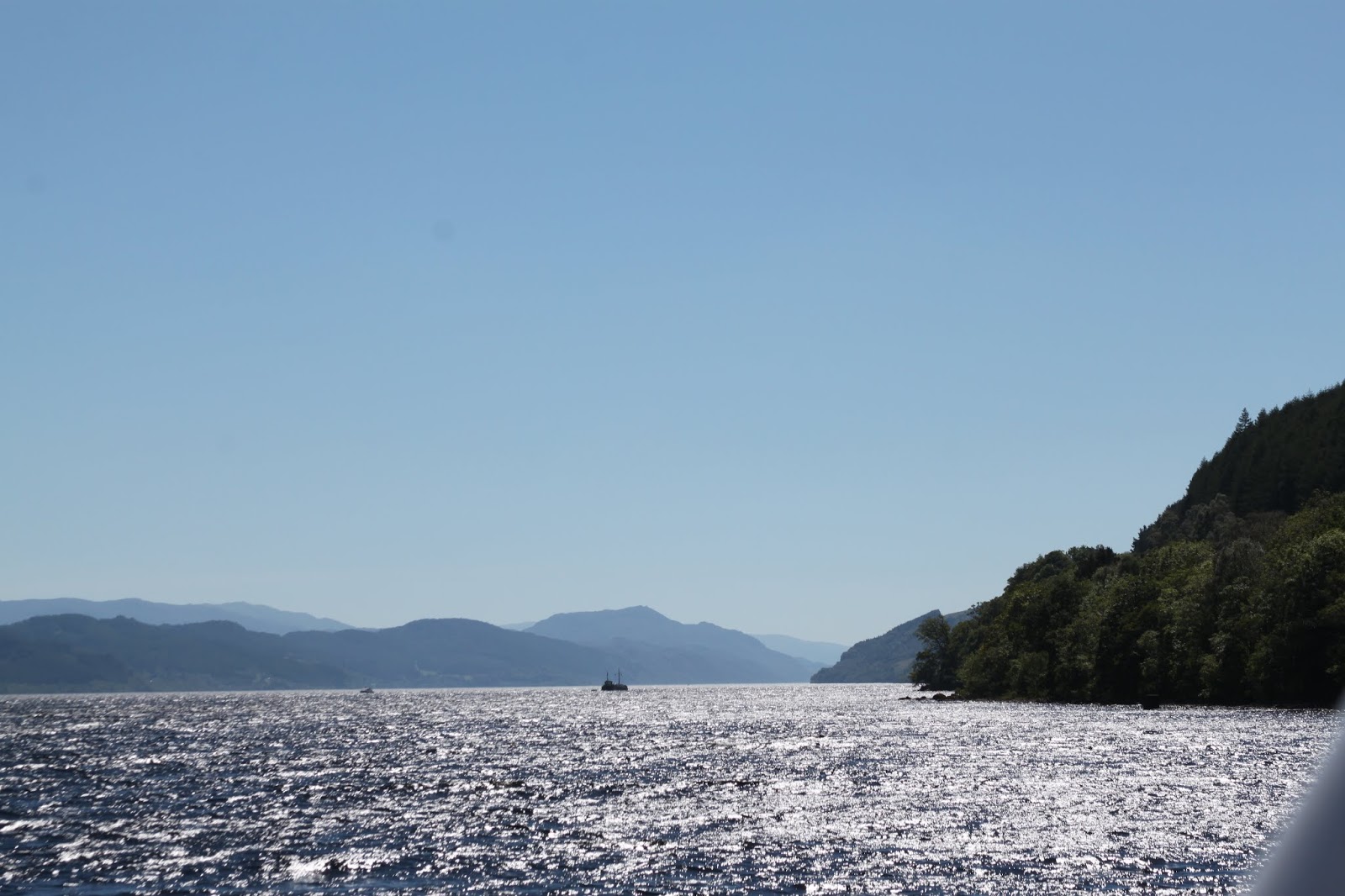
In the Skyfall movie, James Bond (Daniel Craig) was filmed driving his Aston Martin down this stretch of road.